$113K over asking. $187K below asking.
Both statements describe the exact same transaction.
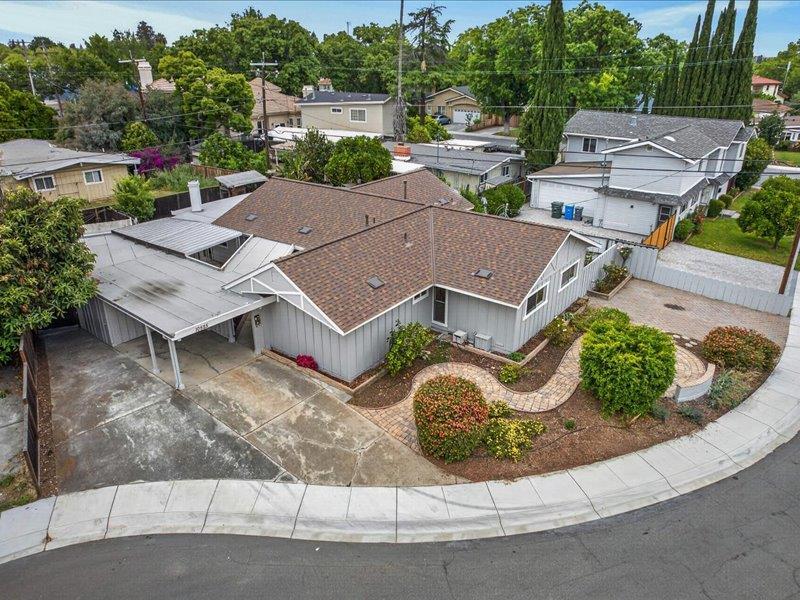
My buyers purchased 10525 Barnhart Ct in Cupertino for $2,412,000.
The home was originally listed at $2,599,000. After the asking price was reduced to $2,299,000, buyer interest increased and the property became competitive.
$113K over reduced asking
$187K below original asking
So, was it a good buy?
Neither number answers that question.
So, was paying $113,000 over the reduced asking price a bad deal?
And if we instead describe the purchase as $187,000 below the original asking price, does that suddenly make it a great deal?
Neither number, by itself, answers the question.
List Price and Market Value Are Not the Same Thing
One of the easiest ways to oversimplify a real estate transaction is to judge the result by how far above or below asking a home sold.
"Sold $100,000 over asking" sounds expensive.
"Purchased $187,000 below asking" sounds like a bargain.
But asking price is not an independent measurement of value. It is a pricing and marketing decision made at a particular moment in time.
A property can be listed above market value, below market value, or very close to it. A price reduction can also change buyer psychology and competition without changing the underlying characteristics of the property.
That is why I believe buyers need to evaluate the home, not simply react to the asking price.
One Home. Three Prices.
- Original List Price
- $2,599,000
- Reduced List Price
- $2,299,000
- Purchase Price
- $2,412,000
- Approximate Size
- 1,885 sq ft
- Approximate Purchase Price Per Sq Ft
- $1,280
- Closed
- July 2, 2026
Buyer represented by Prasanna Rangaswamy, Arcus Homes. Figures are approximate and presented for market context only.
What Changed After the Price Reduction?
The house did not suddenly become a different property when the asking price changed from $2.599 million to $2.299 million.
The location was the same.
The approximately 1,885 square feet was the same.
The condition was the same.
What changed was how the market perceived the opportunity.
The lower asking price attracted additional attention, and competition developed.
That distinction matters. When multiple buyers become interested after a price reduction, focusing exclusively on the new asking price can lead to the wrong conclusion. The important question is not simply how much above asking an offer needs to be.
The better question is what the property is actually worth relative to the available alternatives.
Why My Buyers Saw an Opportunity
My clients had a very specific objective. They wanted to move to Cupertino and be closer to work.
Finding approximately 1,900 square feet in Cupertino while remaining below $2.5 million was not easy.
Barnhart offered that opportunity.
The home itself was older and more modest than many of the surrounding properties, but it was livable and included an upgraded kitchen.
The neighborhood context was also interesting. A number of surrounding properties are larger and have been substantially improved over time.
That does not guarantee future appreciation, expansion, redevelopment, or remodeling potential. Those decisions depend on many factors, including zoning, permitting, construction costs, market conditions, and the individual owner's objectives.
But it was useful context when evaluating the property and the neighborhood as a whole.
Did Paying $113K Over Asking Mean They Overpaid?
Not necessarily.
The $2.299 million asking price was one data point.
Our job as buyers was not to anchor blindly to that number.
We had to consider the property's location, size, condition, comparable alternatives, market competition, neighborhood context, and most importantly, what the property accomplished for these particular buyers.
There is always a price at which an opportunity stops making sense.
Good buyer representation means understanding where that line is before emotion and competition take over.
Did Buying $187K Below the Original Asking Price Make It a Bargain?
Again, not necessarily.
The original $2.599 million asking price was also just one data point.
If an asking price starts too high, purchasing below it does not automatically mean the buyer received a bargain.
This is why I would never describe this transaction simply by saying, "We got it $187,000 below asking."
That might sound impressive, but it misses the point.
The real question is whether $2.412 million represented a sensible value for the property, the market, and my clients' objectives.
What Actually Determines Whether a Home Is Worth Competing For?
For me, the analysis comes down to several things:
- The property itself.
- The location.
- Comparable sales and competing inventory.
- Condition and functionality.
- What alternatives are realistically available to the buyer.
- The level of competition.
- The buyer's objectives.
- And finally, the price at which the opportunity no longer makes sense.
The asking price matters, but it should not replace that analysis.
The Lesson for Bay Area Buyers
Bay Area buyers often hear two pieces of advice:
"Never pay over asking."
Or: "If you got it below asking, you got a good deal."
Neither is a reliable strategy.
A home listed deliberately below market value may reasonably sell substantially above asking. A home listed too aggressively may sell below asking and still not represent particularly good value.
The objective is not to win the comparison against the list price.
The objective is to make a well-informed real estate decision.
For my buyers at Barnhart, that meant recognizing an opportunity, understanding the competition, establishing what the property was worth to them, and competing without losing sight of that value.
Sometimes the right strategy is to negotiate harder.
Sometimes it is to walk away.
Sometimes it is recognizing when an opportunity is worth competing for.
The strategy changes. The advocacy doesn't.
Thinking about buying or selling in the Bay Area?
Let's look beyond the headline numbers and understand what the market is actually telling us.
Prasanna Rangaswamy
Real Estate Advisor | Arcus Homes
CalDRE #01974788 | NMLS #1314117
(510) 209-3085
prasannaadvisory.com
Written by Prasanna Rangaswamy, Real Estate Advisor with Arcus Homes, CalDRE #01974788 | NMLS #1314117. Based in Fremont and advising buyers, sellers and investors across the San Francisco Bay Area and California.
See Beyond The Market.